Go Law
The California Bill of Sale form serves as a crucial document in various transactions, particularly when buying or selling personal property. It outlines essential details such as the names and addresses of the buyer and seller, a description of the item being sold, and the sale price. This form provides a clear record of the transaction, which can help prevent misunderstandings or disputes in the future. Additionally, it may include information about warranties or conditions attached to the sale, ensuring that both parties understand their rights and responsibilities. While not always legally required, having a Bill of Sale can offer protection and peace of mind for both buyers and sellers. Understanding its components and how to properly fill it out can facilitate smoother transactions in California.
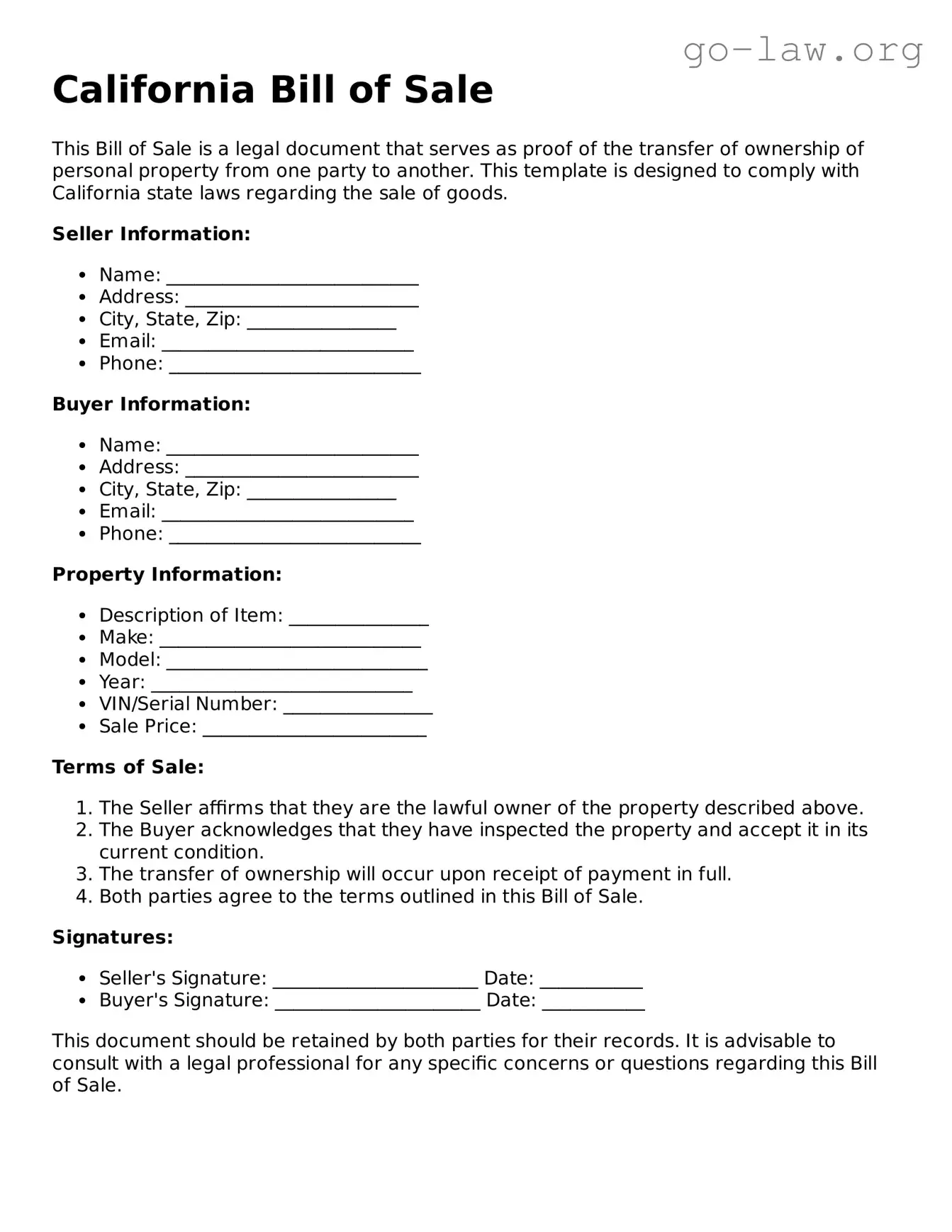
California Bill of Sale
This Bill of Sale is a legal document that serves as proof of the transfer of ownership of personal property from one party to another. This template is designed to comply with California state laws regarding the sale of goods.
Seller Information:
Buyer Information:
Property Information:
Terms of Sale:
Signatures:
This document should be retained by both parties for their records. It is advisable to consult with a legal professional for any specific concerns or questions regarding this Bill of Sale.
| Fact Name | Description |
|---|---|
| Purpose | The California Bill of Sale form serves as a legal document to record the sale of personal property, such as vehicles or equipment. |
| Governing Law | This form is governed by California Civil Code Section 1738, which outlines the requirements for the sale of personal property. |
| Parties Involved | The form typically includes information about the seller and the buyer, ensuring both parties are clearly identified. |
| Property Description | A detailed description of the item being sold is required, including make, model, year, and identification numbers where applicable. |
| Consideration | The form must state the purchase price or consideration being exchanged for the property, providing clarity on the transaction. |
| Signatures | Both the seller and buyer must sign the document, which signifies their agreement to the terms outlined in the bill of sale. |
| Notarization | While notarization is not required for all bills of sale, it can provide additional legal protection and verification of the transaction. |
Filling out the California Bill of Sale form is a straightforward process. After completing the form, you will have a record of the sale that can be used for various purposes, such as transferring ownership of a vehicle or other personal property. Follow these steps to ensure you fill it out correctly.
A California Bill of Sale is a legal document that serves as a record of the transfer of ownership of personal property from one person to another. It is commonly used for the sale of vehicles, boats, and other significant items. This document provides proof that a transaction took place and outlines the details of the sale.
While a Bill of Sale is not legally required for every transaction in California, it is highly recommended for significant purchases. For vehicles, a Bill of Sale is often necessary for registration purposes. It helps both the buyer and seller protect their interests and provides a clear record of the transaction.
A comprehensive Bill of Sale should include the following information:
Yes, you can create your own Bill of Sale. It is important to ensure that it includes all necessary information and is signed by both parties. Templates are available online, or you can draft your own document using the required elements outlined above.
In California, notarization is not typically required for a Bill of Sale. However, having the document notarized can provide an additional layer of protection and authenticity, especially for high-value transactions.
If the item being sold is a vehicle, the Bill of Sale must include specific details such as the Vehicle Identification Number (VIN), make, model, and year. Additionally, the seller must provide the buyer with the vehicle's title, which must be signed over to the buyer at the time of sale.
In California, the sale of certain items may be subject to sales tax. The buyer is typically responsible for paying this tax when registering the item with the appropriate state agency. The Bill of Sale can serve as proof of the purchase price for tax purposes.
If a dispute arises after the sale, the Bill of Sale can serve as evidence of the terms agreed upon by both parties. It is important to keep a copy of the document for your records. In case of a disagreement, both parties may refer to the Bill of Sale to resolve the issue.
Yes, a Bill of Sale can also be used to document a gift. In this case, it should clearly state that the item is being given as a gift and may include details about the relationship between the giver and the recipient.
California Bill of Sale forms can be found online through various legal websites, state government resources, and legal stationery stores. It is advisable to use a form that is specifically designed for California to ensure compliance with state laws.
When filling out the California Bill of Sale form, people often overlook essential details that can lead to complications down the line. One common mistake is failing to provide accurate vehicle identification numbers (VINs). The VIN is crucial for identifying the vehicle and ensuring that the sale is legitimate. If this number is incorrect or missing, it can create confusion and potentially lead to legal issues.
Another frequent error is neglecting to include the correct sale price. This information is important not just for the transaction itself but also for tax purposes. If the sale price is not clearly stated or is inaccurately reported, it may raise questions from the Department of Motor Vehicles (DMV) or tax authorities. Buyers and sellers should agree on a price before completing the form to avoid any discrepancies.
People also often forget to sign the document. A Bill of Sale is not just a formality; it serves as a legal record of the transaction. Without the signatures of both the buyer and seller, the document may not hold up in court if disputes arise later. It's essential to ensure that both parties sign and date the form before finalizing the sale.
In addition, some individuals make the mistake of not providing complete contact information. This includes names, addresses, and phone numbers. Having accurate contact details is vital for any follow-up questions or issues that may come up after the sale. If the information is incomplete, it can lead to difficulties in communication and resolution of potential problems.
Finally, many people overlook the importance of keeping a copy of the Bill of Sale for their records. After the transaction is complete, both the buyer and seller should retain a copy of the signed document. This serves as proof of the sale and can be invaluable if any disputes arise in the future. Not having a copy can leave one party at a disadvantage should questions about the transaction come up later.
The California Bill of Sale form is a crucial document for transferring ownership of personal property, particularly vehicles. However, several other forms and documents often accompany it to ensure a smooth transaction and compliance with state laws. Below is a list of these additional forms, each serving a specific purpose in the sales process.
These forms and documents collectively facilitate the transfer of ownership and help ensure compliance with legal requirements. Properly handling each of these items can prevent future disputes and provide clarity for both the buyer and seller.
The California Bill of Sale form bears similarities to the Purchase Agreement. A Purchase Agreement outlines the terms and conditions of a sale between a buyer and seller. Both documents serve to formalize the transaction and protect the interests of both parties. While a Bill of Sale is typically more straightforward, focusing on the transfer of ownership, a Purchase Agreement can include detailed clauses regarding payment terms, warranties, and contingencies, making it a more comprehensive document for significant transactions.
Another document akin to the California Bill of Sale is the Title Transfer Document. This document is essential when transferring ownership of a vehicle or property. Like the Bill of Sale, it serves as proof of the transfer and may be required for registration purposes. The Title Transfer Document specifically addresses the legal title of the property, while the Bill of Sale provides a record of the transaction itself, including the sale price and date of transfer.
The Lease Agreement also shares characteristics with the California Bill of Sale. While a Lease Agreement pertains to the rental of property rather than outright sale, both documents establish a legal relationship between parties. They outline the terms of the transaction, including duration, responsibilities, and payment. However, the Lease Agreement focuses on the temporary use of property, while the Bill of Sale signifies a permanent transfer of ownership.
A Service Agreement can be compared to the California Bill of Sale in that both documents formalize a transaction. A Service Agreement details the services provided, the compensation for those services, and the responsibilities of each party. In contrast, the Bill of Sale focuses on the exchange of goods. Both documents serve to clarify expectations and protect the rights of the involved parties, ensuring that all terms are understood and agreed upon.
Lastly, the Affidavit of Ownership is similar to the California Bill of Sale in that it can serve as proof of ownership. This document is often used when an individual claims ownership of property without a traditional title or bill of sale. Both documents help establish legal ownership and can be used in disputes or for registration purposes. However, the Affidavit of Ownership typically requires notarization and may include a sworn statement, while the Bill of Sale is generally a simpler record of the transaction itself.
When filling out the California Bill of Sale form, there are several important considerations to keep in mind. Below is a list of things you should and shouldn't do to ensure a smooth transaction.
Following these guidelines will help ensure that your Bill of Sale is completed correctly and serves its intended purpose. A well-filled form protects both parties involved in the transaction.
Understanding the California Bill of Sale form is crucial for anyone involved in a transaction. However, several misconceptions can lead to confusion. Here are nine common misunderstandings:
Being aware of these misconceptions can help ensure that your transactions are smooth and legally sound. Always consider consulting a professional if you have questions or concerns about the Bill of Sale process.
When dealing with the California Bill of Sale form, it's important to understand its purpose and how to fill it out correctly. Here are some key takeaways:
By following these guidelines, you can ensure a smooth transaction process when using the California Bill of Sale form.
Texas Dmv Bill of Sale - A Bill of Sale can be a valuable asset in protecting consumer rights.