Go Law
The Florida Bill of Sale form serves as an essential document for individuals engaged in the buying and selling of personal property within the state. This form provides a clear record of the transaction, detailing crucial information such as the identities of both the buyer and seller, a description of the item being sold, and the agreed-upon purchase price. It also outlines any warranties or guarantees, ensuring both parties understand their rights and responsibilities. By capturing the date of the transaction and any pertinent conditions, the Bill of Sale not only protects the interests of both parties but also serves as proof of ownership transfer. Whether you're selling a vehicle, equipment, or other valuable items, utilizing this form can streamline the process and provide peace of mind. Understanding its components and proper usage is vital for anyone involved in a sale, making the Florida Bill of Sale an indispensable tool in property transactions.
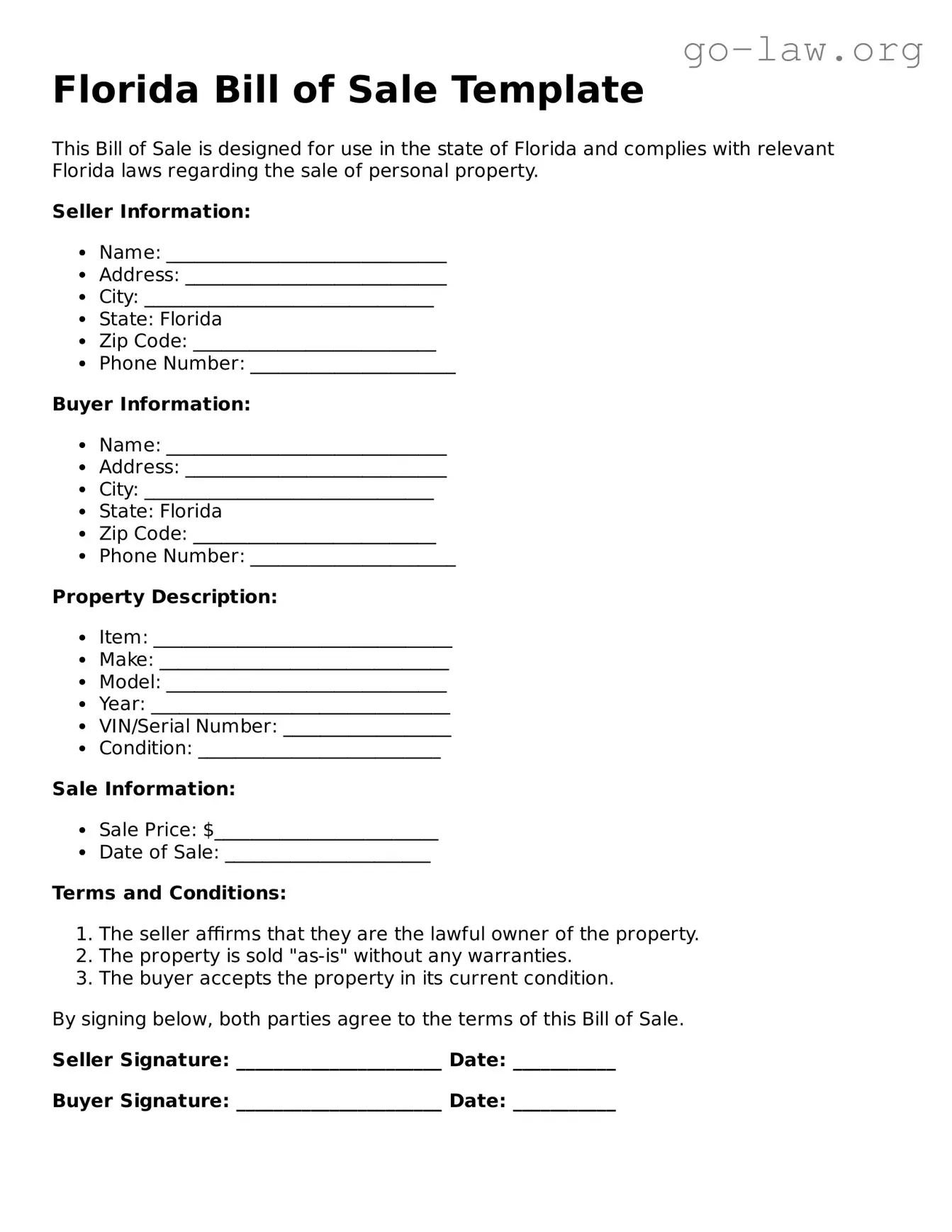
Florida Bill of Sale Template
This Bill of Sale is designed for use in the state of Florida and complies with relevant Florida laws regarding the sale of personal property.
Seller Information:
Buyer Information:
Property Description:
Sale Information:
Terms and Conditions:
By signing below, both parties agree to the terms of this Bill of Sale.
Seller Signature: ______________________ Date: ___________
Buyer Signature: ______________________ Date: ___________
| Fact Name | Details |
|---|---|
| Purpose | The Florida Bill of Sale form is used to document the sale of personal property, including vehicles and other items. |
| Governing Law | The form is governed by Florida Statutes, specifically Chapter 679, which pertains to the sale of goods. |
| Required Information | The form typically requires details such as the names of the buyer and seller, a description of the item, and the sale price. |
| Notarization | While notarization is not always required, it is recommended for added legal protection and to verify the identities of the parties involved. |
| Use for Vehicles | A Bill of Sale is particularly important for vehicle transactions, as it can be used to transfer ownership and register the vehicle with the state. |
| Record Keeping | Both the buyer and seller should keep a copy of the Bill of Sale for their records, as it serves as proof of the transaction. |
Once you have obtained the Florida Bill of Sale form, you will need to complete it accurately to ensure a smooth transaction. This document serves as proof of the sale and includes important details about the buyer, seller, and the item being sold. Follow the steps below to fill out the form correctly.
After completing the form, it is advisable for both parties to keep a copy for their records. This will serve as documentation of the transaction and can be useful in the future if any disputes arise.
A Florida Bill of Sale is a legal document that records the transfer of ownership of personal property from one person to another. This document is important for both the buyer and the seller, as it provides proof of the transaction and details about the item being sold.
A Bill of Sale is typically needed in the following situations:
While it may not be required for every sale, having a Bill of Sale can protect both parties in case of disputes.
A comprehensive Bill of Sale should include:
Including this information helps ensure clarity and protects both parties involved in the sale.
In Florida, notarization of a Bill of Sale is not required for most transactions. However, it can be beneficial to have the document notarized as it adds an extra layer of security and authenticity. Some buyers or sellers may request notarization for their records.
Yes, you can use a generic Bill of Sale template, but it is essential to ensure that it meets Florida's legal requirements. Make sure to include all necessary details specific to your transaction. Customizing the template to fit your needs can help avoid any issues later on.
Once the Bill of Sale is completed and signed by both parties, each party should keep a copy for their records. This document serves as proof of the transaction and can be useful if any disputes arise in the future. If the sale involves a vehicle, you may also need to submit the Bill of Sale to the Florida Department of Highway Safety and Motor Vehicles.
Yes, a Bill of Sale is a legally binding document once it is signed by both parties. It outlines the terms of the sale and protects the rights of both the buyer and the seller. However, it is important to ensure that the information included is accurate and complete to avoid any potential legal issues.
Filling out the Florida Bill of Sale form can seem straightforward, but many individuals encounter common pitfalls that can lead to complications down the road. One of the most frequent mistakes is failing to provide accurate information about the vehicle or item being sold. It’s essential to include the correct make, model, year, and Vehicle Identification Number (VIN) for vehicles. Inaccuracies can lead to disputes or issues with registration later.
Another common error is neglecting to include the purchase price. While it may seem obvious, leaving this section blank or providing an incorrect amount can create confusion and may affect tax obligations. Always double-check that the price reflects the agreed-upon amount between the buyer and seller.
Many individuals also overlook the necessity of signatures. Both the seller and the buyer must sign the document for it to be valid. Failing to obtain both signatures can render the Bill of Sale unenforceable. It’s a good practice to ensure that all parties involved have signed before finalizing the transaction.
Additionally, people sometimes forget to date the form. The date of the transaction is crucial for record-keeping and can impact the transfer of ownership. Without a date, it may be challenging to establish when the sale occurred, which can lead to complications in the future.
Another mistake involves not keeping a copy of the completed Bill of Sale. After the transaction, it’s vital for both parties to retain a copy for their records. This document serves as proof of the sale and can be useful for future reference, especially if any disputes arise.
Some sellers may also mistakenly assume that a Bill of Sale is only necessary for significant transactions. However, even for smaller items, having a written record is advisable. It protects both the buyer and seller and provides clarity about the terms of the sale.
Lastly, individuals often forget to check local laws and requirements. While the Florida Bill of Sale form is standardized, there may be additional requirements or specific regulations in certain counties or municipalities. Being aware of these can prevent potential legal issues later on.
When completing a transaction involving the sale of personal property in Florida, the Bill of Sale form is an essential document. However, several other forms and documents can complement the Bill of Sale to ensure a smooth transfer of ownership and provide additional protection for both the buyer and seller. Here’s a brief overview of some commonly used forms:
Using these documents in conjunction with the Florida Bill of Sale can help ensure that all aspects of the transaction are covered. Each document serves a unique purpose, providing clarity and protection for everyone involved in the sale.
The Florida Bill of Sale form shares similarities with the Vehicle Title Transfer form. Both documents serve as proof of ownership transfer, particularly for vehicles. When a buyer purchases a vehicle, the seller must complete the title transfer to legally hand over ownership. This ensures that the new owner can register the vehicle in their name, just as a Bill of Sale confirms the sale transaction. Both forms include essential details such as the names of the buyer and seller, vehicle identification information, and the sale price, making them vital for legal and registration purposes.
Another document that resembles the Florida Bill of Sale is the Purchase Agreement. A Purchase Agreement outlines the terms and conditions of a sale, similar to how a Bill of Sale confirms the transaction. While a Purchase Agreement is typically more detailed and may cover various aspects of the sale, including payment terms and contingencies, both documents serve to protect the interests of both parties. They establish clear expectations and provide a record of the transaction, which can be referenced if disputes arise in the future.
The Lease Agreement is another document that exhibits similarities with the Florida Bill of Sale. While a Bill of Sale is used for transferring ownership, a Lease Agreement involves the temporary transfer of possession of property, such as an apartment or a vehicle. Both documents require the identification of the parties involved and a description of the property. They also typically include terms regarding payment and responsibilities, ensuring that both parties understand their obligations. In essence, both serve to formalize an agreement between parties regarding property use or ownership.
Lastly, the Receipt for Payment is akin to the Florida Bill of Sale in that it serves as proof of a transaction. When a buyer pays for an item, a receipt is issued to confirm that the payment has been made. While a Bill of Sale provides a more comprehensive overview of the sale, including details about the item and the parties involved, a receipt simply confirms the exchange of money. Both documents are essential for record-keeping and can be used to verify the legitimacy of a transaction, protecting both buyers and sellers.
When filling out the Florida Bill of Sale form, it is important to follow certain guidelines to ensure the document is completed correctly. Below is a list of things you should and shouldn't do:
By following these guidelines, you can help ensure that the Bill of Sale is valid and serves its intended purpose.
The Florida Bill of Sale form is often misunderstood. Here are four common misconceptions:
When dealing with the Florida Bill of Sale form, it’s essential to understand its purpose and the details involved. Here are some key takeaways to keep in mind:
Understanding these points can help ensure a smooth transaction and protect the interests of both the buyer and seller.
Texas Dmv Bill of Sale - In some cases, a Bill of Sale may require notarization for added legal protection.