Go Law
The Texas Bill of Sale form serves as a crucial document for individuals engaged in the transfer of ownership of personal property, including vehicles, boats, and other goods. This form is designed to provide a clear and concise record of the transaction, protecting both the buyer and seller by detailing essential information. Key components of the form typically include the names and addresses of both parties, a description of the item being sold, the sale price, and the date of the transaction. Additionally, it may include terms and conditions that outline any warranties or representations made by the seller. While not always required by law, having a Bill of Sale can facilitate a smoother transfer process and serve as proof of ownership for the buyer. Understanding the significance of this document can help ensure that both parties are well-informed and protected during the sale process.
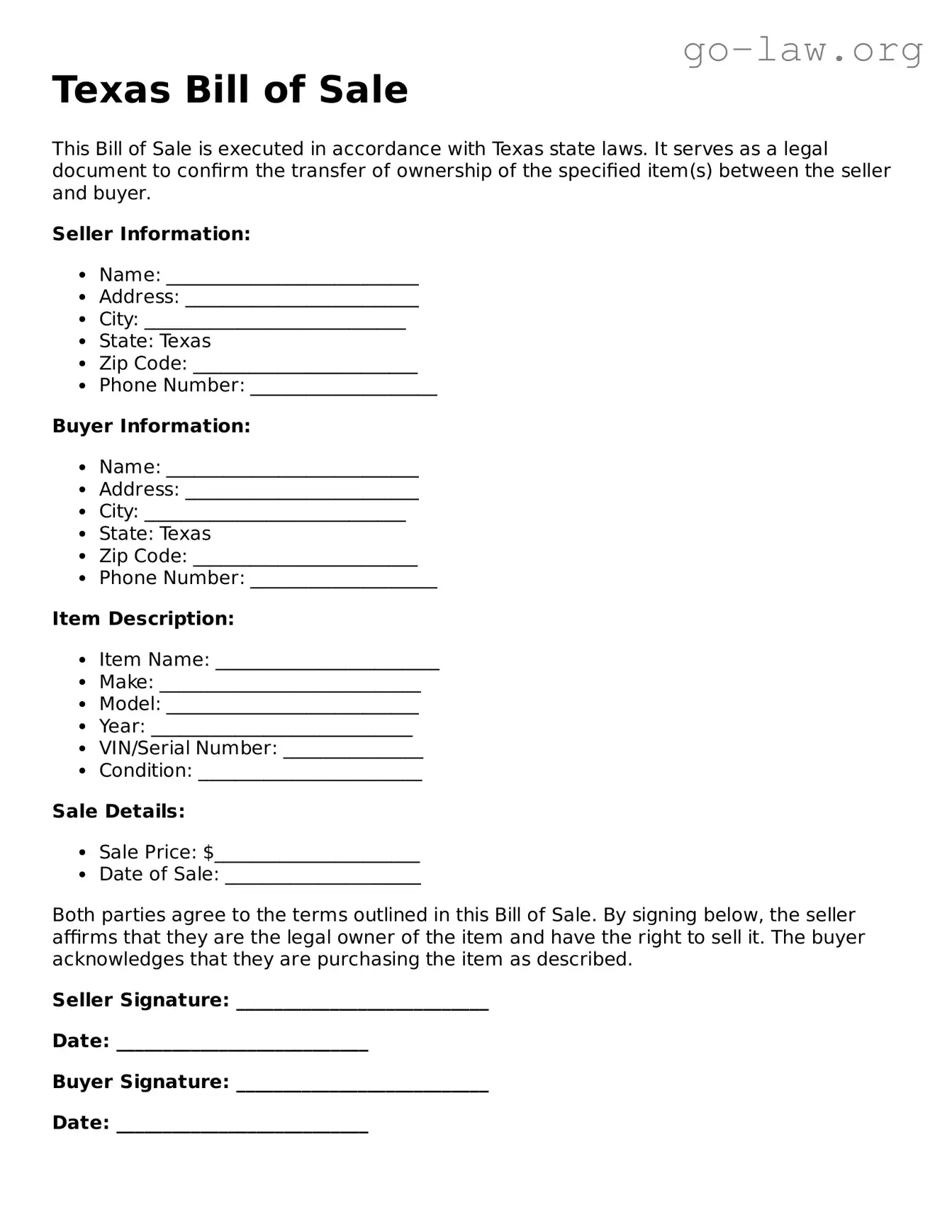
Texas Bill of Sale
This Bill of Sale is executed in accordance with Texas state laws. It serves as a legal document to confirm the transfer of ownership of the specified item(s) between the seller and buyer.
Seller Information:
Buyer Information:
Item Description:
Sale Details:
Both parties agree to the terms outlined in this Bill of Sale. By signing below, the seller affirms that they are the legal owner of the item and have the right to sell it. The buyer acknowledges that they are purchasing the item as described.
Seller Signature: ___________________________
Date: ___________________________
Buyer Signature: ___________________________
Date: ___________________________
This document should be kept for your records. Ensure that all information is filled out accurately to avoid any disputes in the future.
| Fact Name | Description |
|---|---|
| Definition | A Texas Bill of Sale is a legal document that records the transfer of ownership of personal property from one person to another. |
| Governing Law | The Texas Bill of Sale is governed by the Texas Business and Commerce Code, specifically Section 2.201 regarding the sale of goods. |
| Types of Property | This form can be used for various types of personal property, including vehicles, equipment, and furniture. |
| Notarization | While notarization is not required for all Bill of Sale forms in Texas, it is recommended for vehicle sales to ensure authenticity. |
| Consideration | The document should specify the consideration, or payment, exchanged for the property to validate the transaction. |
| Seller's Warranty | The seller may include warranties regarding the condition of the property, which can protect the buyer from future claims. |
| Record Keeping | Both the buyer and seller should keep a copy of the Bill of Sale for their records, as it serves as proof of the transaction. |
Filling out the Texas Bill of Sale form is an important step when transferring ownership of a vehicle, personal property, or other items. Once you have the form ready, you will need to provide specific information to ensure that the transaction is documented properly.
After completing the form, it’s wise to keep it in a safe place. This document serves as proof of the transaction and may be needed for future reference, such as when registering the item or for tax purposes.
A Texas Bill of Sale form is a legal document that records the transfer of ownership of personal property from one person to another. It serves as proof of the transaction and includes important details about the item being sold, the buyer, and the seller. This form is commonly used for vehicles, boats, trailers, and other valuable items. Having a Bill of Sale can protect both parties by providing a clear record of the sale.
A Texas Bill of Sale usually contains the following information:
Providing accurate and complete information helps ensure that both parties are protected and that the document is legally valid.
While a Bill of Sale is not required for every transaction in Texas, it is highly recommended for significant purchases. For example, if you are buying or selling a vehicle, a Bill of Sale is essential for registering the vehicle and transferring the title. For smaller items, it may not be necessary, but having a record can still be beneficial in case of disputes or misunderstandings.
Creating a Texas Bill of Sale can be straightforward. You can find templates online or draft your own document. Follow these steps:
Taking these steps ensures that the Bill of Sale is complete and serves its purpose effectively.
Filling out a Texas Bill of Sale form can seem straightforward, but many individuals make common mistakes that can lead to confusion or even legal issues down the line. One frequent error is providing incomplete information. When filling out the form, it’s essential to include all necessary details such as the names and addresses of both the buyer and seller, a complete description of the item being sold, and the sale price. Omitting any of this information can create complications, especially if disputes arise later.
Another mistake often encountered is failing to accurately describe the item being sold. Whether it’s a vehicle, piece of equipment, or personal property, the description should be as detailed as possible. This includes the make, model, year, and any distinguishing features. A vague description can lead to misunderstandings about what exactly is being sold, which can be problematic for both parties involved.
Additionally, many people overlook the importance of signatures. Both the buyer and seller should sign the Bill of Sale to validate the transaction. Without signatures, the document may not hold up in court if a dispute arises. It’s a simple step, but one that is often forgotten in the excitement of a sale.
Not keeping a copy of the completed Bill of Sale is another common oversight. Once the form is filled out and signed, it’s crucial for both parties to retain a copy for their records. This document serves as proof of the transaction and can be invaluable if any issues come up later. Without a copy, it may be difficult to resolve disputes or provide evidence of ownership.
Lastly, individuals sometimes fail to check for local regulations that may apply to their specific situation. Different counties or cities in Texas might have unique requirements for a Bill of Sale, especially for certain types of items like vehicles or boats. It’s wise to research these regulations to ensure compliance and avoid potential legal troubles.
When engaging in the sale or transfer of personal property in Texas, several documents may complement the Texas Bill of Sale. Each document serves a specific purpose, ensuring that both parties have a clear understanding of the transaction and protecting their interests. Below is a list of commonly used forms and documents that may accompany the Bill of Sale.
Each of these documents plays a vital role in ensuring a smooth transaction. By understanding their purposes, both buyers and sellers can navigate the sale process with confidence and clarity. It is always advisable to consult with a professional when drafting or reviewing these documents to ensure compliance with Texas laws.
The Texas Bill of Sale form shares similarities with the Vehicle Bill of Sale, which is specifically designed for the transfer of ownership of a vehicle. Both documents serve as proof of the transaction between a seller and a buyer. They include essential details such as the names of the parties involved, a description of the item being sold, and the sale price. The Vehicle Bill of Sale often includes additional information relevant to vehicles, such as the Vehicle Identification Number (VIN) and odometer reading, which are not typically included in a general Bill of Sale.
Another document akin to the Texas Bill of Sale is the Personal Property Bill of Sale. This form is used for the sale of personal items, such as furniture or electronics. Like the Texas Bill of Sale, it outlines the seller and buyer’s information, a description of the item, and the agreed sale price. The Personal Property Bill of Sale may also specify any conditions of the sale, similar to how the Texas Bill of Sale can detail warranties or disclaimers regarding the item sold.
The Real Estate Purchase Agreement is another document that shares some characteristics with the Texas Bill of Sale. While primarily used for real estate transactions, both documents formalize the transfer of ownership. They contain details about the parties involved, the property being sold, and the purchase price. However, the Real Estate Purchase Agreement typically includes more complex terms and conditions, such as contingencies, financing details, and closing dates, reflecting the nature of real estate transactions.
The Lease Agreement also bears similarities to the Texas Bill of Sale, particularly in how both documents outline the terms of a transaction. While a Lease Agreement governs the rental of property rather than a sale, it details the parties involved, the property description, and the agreed-upon payment terms. Both documents serve to protect the rights of the parties and provide a clear record of the transaction.
The Gift Bill of Sale is another related document. It is used when an item is given as a gift rather than sold. Like the Texas Bill of Sale, it includes the names of the giver and receiver, a description of the item, and a statement of value. This document can serve as proof of ownership transfer, which may be important for tax purposes or future disputes, similar to how a standard Bill of Sale functions.
The Equipment Bill of Sale is similar in function to the Texas Bill of Sale but is specifically tailored for the sale of business equipment. This document outlines the transaction details and ensures both parties understand the terms of the sale. It often includes specific information about the equipment's condition and warranties, paralleling the provisions found in the Texas Bill of Sale regarding item descriptions and seller disclosures.
The Boat Bill of Sale is another document that resembles the Texas Bill of Sale, as it facilitates the transfer of ownership for a boat. This form includes the necessary information about the seller, buyer, and boat, such as the hull identification number and registration details. Both documents serve to provide legal proof of ownership transfer, ensuring that the buyer has clear title to the item.
Finally, the Firearm Bill of Sale is similar to the Texas Bill of Sale in that it documents the sale of firearms. This form requires specific information about the firearm, such as the make, model, and serial number, alongside the seller and buyer’s details. Both documents are essential for establishing ownership and can help protect the rights of both parties involved in the transaction.
When filling out the Texas Bill of Sale form, it is essential to approach the task with care and attention to detail. Here are some important dos and don’ts to keep in mind.
By adhering to these guidelines, you can help ensure that the Bill of Sale is properly filled out and serves its intended purpose effectively.
Many people have misunderstandings about the Texas Bill of Sale form. Here are six common misconceptions, along with clarifications to help you navigate this important document.
Understanding these misconceptions can help ensure that you use the Texas Bill of Sale form correctly and effectively. Always consider consulting with a legal expert if you have specific questions or concerns.
When dealing with the Texas Bill of Sale form, understanding its key aspects is crucial for a smooth transaction. Here are some important takeaways:
Understanding these points will help facilitate a successful transaction when using the Texas Bill of Sale form.
Do You Need a Bill of Sale to Register a Car in Florida - This document can help both parties avoid potential legal issues in the future.
What Does a Vehicle Bill of Sale Look Like - A Bill of Sale can be particularly important when selling high-value items.