
Go Law
The Lab Requisition form is an essential document used by healthcare providers to request laboratory tests for patients. This form includes key information such as the provider's name, contact details, and unique identification numbers. It also requires the patient's demographic information, including their name, date of birth, and gender. A critical section of the form is dedicated to diagnosis codes, which are necessary for insurance billing and determining test coverage. The requisition outlines various tests, categorized into groups like urinalysis, hematology, and chemistry profiles. Each category lists specific tests that can be ordered, along with any special instructions, such as whether the patient needs to fast before testing. Additionally, the form includes sections for therapeutic drug monitoring and special chemistry tests. Providers must sign and date the form, confirming that the requested tests have been approved. Clear instructions for submitting the form and additional contact information for lab services are also provided, ensuring a smooth process for both providers and patients.
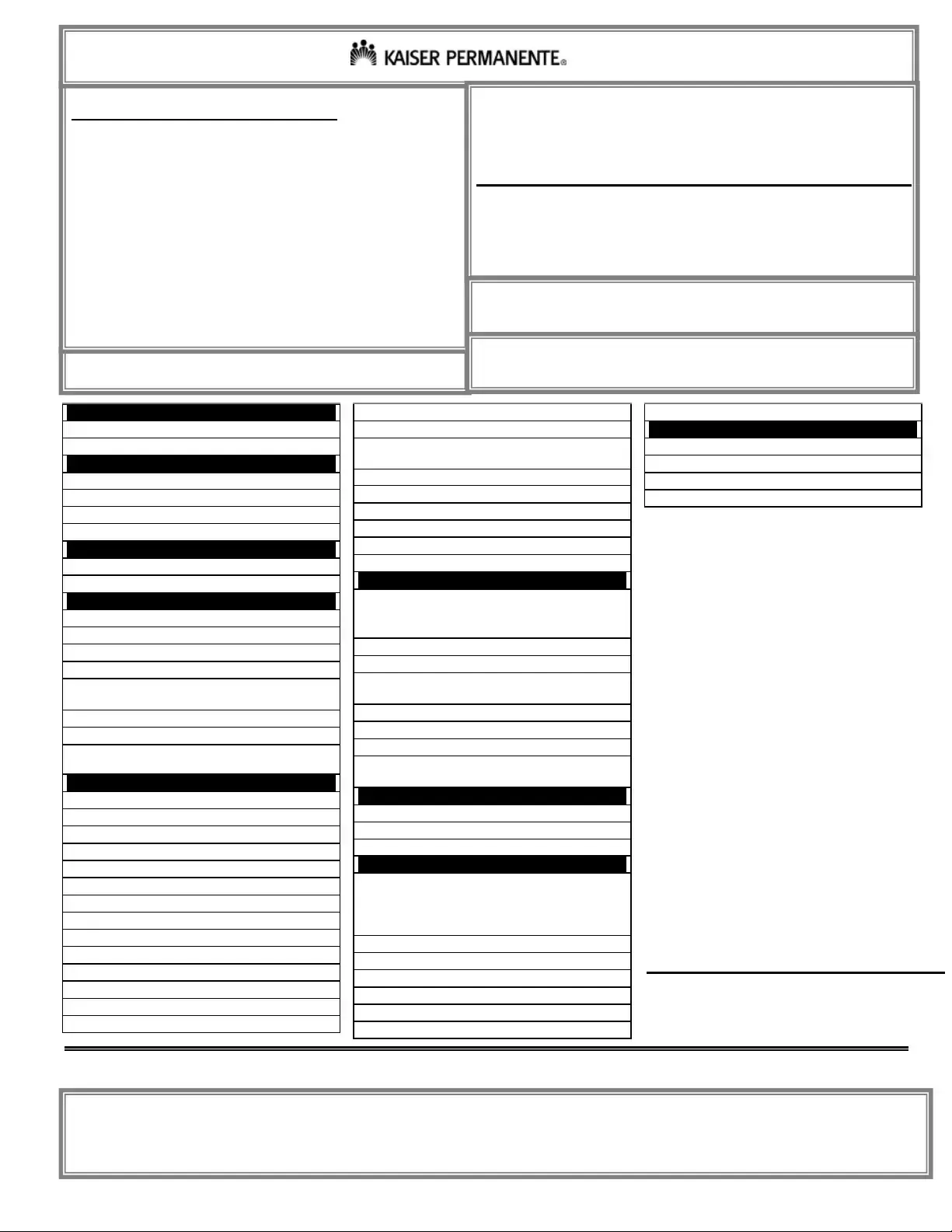
| Fact Name | Fact Description |
|---|---|
| Provider Identification | The form requires the community physician's UPIN or NPI number for identification. |
| Patient Information | Essential patient details include name, date of birth, and gender. |
| Diagnosis Codes | ICD-9 diagnosis codes must be filled in, as Medicare does not cover routine screening tests. |
| Test Options | The form lists various tests, including urinalysis, hematology, and chemistry profiles. |
| Fasting Requirements | Providers can specify whether tests require fasting or if they are non-fasting. |
| Submission Instructions | Providers must fax the signed and dated form to the designated laboratory number. |
| Special Testing | Includes specialized tests such as therapeutic drug monitoring and glucose tolerance tests. |
| Sample Collection | Routine laboratory testing does not require appointments at Kaiser Permanente facilities. |
| Reorder Information | The form includes a reorder number for tracking and resubmission purposes. |
| Governing Law | Specific state laws may apply to laboratory requisition forms; check local regulations for compliance. |
Filling out the Lab Requisition form is a straightforward process. Once completed, this form will be sent to the lab for testing. Ensure all information is accurate to avoid any delays in processing. Follow these steps to fill out the form correctly.
A Lab Requisition Form is a document that healthcare providers use to request laboratory tests for their patients. This form includes essential information such as the patient's details, the specific tests needed, and the physician's information. It ensures that the lab has all the necessary data to process the tests accurately and efficiently.
Filling out the Lab Requisition Form is straightforward. Here are the key steps:
If you have questions regarding the tests or need clarification about the requisition form, you can contact the Laboratory Client Services Department at 303-404-4050. They are available Monday through Friday from 8 AM to 6 PM and can assist with any inquiries related to specimen collection or tube types.
Once the Lab Requisition Form is completed, it should be faxed to the designated number: 303-404-4030. It’s important to ensure that the form is signed and dated by the provider to avoid any delays in processing the tests. Remember, no specimens will be accepted directly at any Kaiser Permanente facility, so faxing is the preferred method.
Filling out a Lab Requisition form accurately is crucial for ensuring that patients receive the correct tests and diagnoses. However, several common mistakes can lead to complications. Recognizing these errors can help streamline the process and improve patient care.
One frequent mistake is failing to include the ICD-9 diagnosis code(s). This information is essential for insurance coverage and proper test justification. Omitting this code can result in delays or denials of coverage, causing unnecessary stress for patients and providers alike.
Another common error involves not filling in the patient’s date of birth. This detail is vital for identifying the patient and ensuring that the correct medical history is considered. Without it, there could be confusion, especially if multiple patients have similar names.
Inaccurate patient information, such as the patient's name or address, can also create significant issues. If the name is misspelled or the address is incorrect, it may lead to miscommunication and delays in receiving test results. Always double-check this information before submission.
Additionally, providers sometimes forget to indicate the gender of the patient. This detail is important for certain tests and can affect the interpretation of results. It is essential to mark the appropriate box to avoid any confusion later.
Another mistake involves not specifying the test urgency. Whether the tests are routine, STAT, or require fasting can impact how quickly results are processed. Failing to indicate this can lead to mismanagement of the patient's care.
Many also overlook the importance of the provider's signature and date. This confirmation is necessary to validate the requisition. Without it, the laboratory may not proceed with the tests, leading to delays in diagnosis and treatment.
Lastly, providers often forget to include comments or special instructions in the designated section. This can be particularly important for unique patient circumstances or specific testing requirements. Including this information can help laboratory staff better understand the context of the tests being ordered.
By being aware of these common mistakes, providers can ensure that the Lab Requisition form is filled out correctly. This attention to detail not only facilitates a smoother testing process but also enhances the overall quality of patient care.
When a healthcare provider orders lab tests, several forms and documents often accompany the Lab Requisition form to ensure a smooth process. Each document plays a crucial role in facilitating communication between the provider, the laboratory, and the patient. Understanding these documents can help streamline the testing process and improve patient care.
By familiarizing yourself with these accompanying documents, you can enhance the efficiency of lab testing and improve overall patient outcomes. Each form contributes to a comprehensive approach to healthcare, ensuring that patients receive the best possible care throughout the testing process.
The Lab Requisition form shares similarities with a Prescription form, which is commonly used in healthcare settings. Both documents serve as a means of communication between healthcare providers and laboratories or pharmacies. A Prescription form includes essential patient information, medication details, and provider signatures, much like the Lab Requisition form captures patient demographics, provider information, and specific tests to be conducted. The primary function of both forms is to ensure that the right services are delivered to the right patients, reflecting the provider's clinical judgment.
Another document that resembles the Lab Requisition form is the Referral form. This form is utilized when a primary care physician refers a patient to a specialist for further evaluation or treatment. Similar to the Lab Requisition, the Referral form contains patient information, the referring provider's details, and specific reasons for the referral. Both documents aim to facilitate continuity of care, ensuring that all relevant information is communicated effectively to the receiving party.
The Patient Registration form also shares characteristics with the Lab Requisition form. This document collects vital information about the patient, including demographics, insurance details, and medical history. While the Lab Requisition focuses on laboratory tests, both forms are essential for establishing a patient's identity and ensuring that healthcare providers have the necessary information to deliver appropriate care. They are foundational documents that support the overall healthcare process.
In addition, the Consent form is akin to the Lab Requisition form in that it requires patient or guardian signatures to authorize specific medical actions. The Consent form typically outlines the procedures to be performed and any associated risks. Similarly, the Lab Requisition form indicates that the tests have been approved by the attending physician, ensuring that the patient is aware of the tests being conducted. Both documents emphasize the importance of informed consent in the healthcare setting.
The Medical History form can also be compared to the Lab Requisition form. This document gathers comprehensive information about a patient's past medical conditions, surgeries, and medications. While the Lab Requisition focuses on specific tests to be performed, both forms contribute to a complete understanding of the patient's health status. They ensure that healthcare providers have a thorough background to guide their clinical decisions.
A Laboratory Test Result form bears similarities to the Lab Requisition form as well. Once laboratory tests are completed, results are typically documented on this form, which includes patient information, test details, and findings. Like the Lab Requisition, the Test Result form is integral to the diagnostic process, providing healthcare providers with crucial information to inform patient care. Both documents play a role in the continuum of care, linking testing and diagnosis.
The Insurance Authorization form is another document that resembles the Lab Requisition form. This form is often required by insurance companies before certain tests or procedures can be performed. Similar to the Lab Requisition, it includes patient details and the specific services being requested. Both forms are essential for ensuring that the necessary approvals are in place for medical services, helping to streamline the billing and reimbursement process.
The Treatment Plan form is also comparable to the Lab Requisition form. This document outlines the proposed course of treatment for a patient, including any tests that may be necessary. Like the Lab Requisition, it requires input from the healthcare provider and serves as a roadmap for patient care. Both forms reflect the provider's clinical decision-making and are critical for ensuring that patients receive appropriate and timely interventions.
Finally, the Discharge Summary form can be likened to the Lab Requisition form. This document is prepared when a patient is discharged from a healthcare facility and includes a summary of the patient's treatment, follow-up care, and any necessary tests. Both forms serve to communicate important information about a patient's care, ensuring continuity as the patient transitions between different healthcare settings.
When filling out the Lab Requisition form, attention to detail is crucial. Here’s a list of things to do and things to avoid to ensure the process goes smoothly.
Misconceptions about the Lab Requisition form can lead to confusion for both healthcare providers and patients. Here are eight common misconceptions explained:
Filling out the Lab Requisition form correctly is essential for accurate testing and patient care. Here are some key takeaways to keep in mind:
By following these guidelines, you can help ensure a smooth process for laboratory testing and improve patient outcomes.