Go Law

Go Law

Homepage Download Pre Trip Inspection Checklist Form in PDF
Contents

The Pre Trip Inspection Checklist is an essential tool for ensuring vehicle safety and compliance before hitting the road. This comprehensive form guides drivers through a systematic evaluation of various vehicle components, including brakes, lights, tires, and fluid levels. By methodically checking each aspect, drivers can identify potential issues that may compromise safety or lead to costly repairs down the line. The checklist not only emphasizes mechanical integrity but also highlights the importance of proper documentation, ensuring that all inspections are recorded accurately. Furthermore, it serves as a valuable resource for both individual drivers and fleet operators, promoting accountability and adherence to regulatory standards. Regular use of the Pre Trip Inspection Checklist fosters a culture of safety and diligence, ultimately protecting not just the driver, but also other road users.

Preview - Pre Trip Inspection Checklist Form

Class A CDL Pre-Trip Inspection
Tractor Trailer
®
FRONT OF TRACTOR
LIGHTS & REFLECTORS
o Proper Color
o Working
Lights
o Not Broken
o Not cracked
LEAKS
License Plate
o Check for puddles
o Check for drips under engine
Leaks
WATER PUMP
o Mounted Securely
o No missing bolts or parts
o Hoses attached securely
o No leaking hoses or water pump
o Belts no more than ¾ inch of play
o Belts not cracked, frayed, or damaged
ALTERNATOR
o Mounted Securely
o No missing bolts or parts
o Wires good connections, not frayed
o Belt no more than ¾ inch of play
o Belts not frayed or cracked
OIL LEVEL
o Check for level and condition
PLUS ALL OTHER HOSES &
WIRING
o Not cracked, frayed, or broken
o Belts no more than ¾ inch of play
o Hoses not leaking
Pre-Trip Inspection Test Items Reference Items
ENGINE COMPARTMENT - PASSENGER SIDE
Engine Air Duct
Work
Engine Air Duct
Work
Turbo Charger Alternator
Accessory Drive
Belts
Water Pump
Oil Dip Stick
Oil Fill
Pre-Trip Inspection Test Items Reference Items
1
Class A CDL Pre-Trip Inspection
Tractor Trailer
®
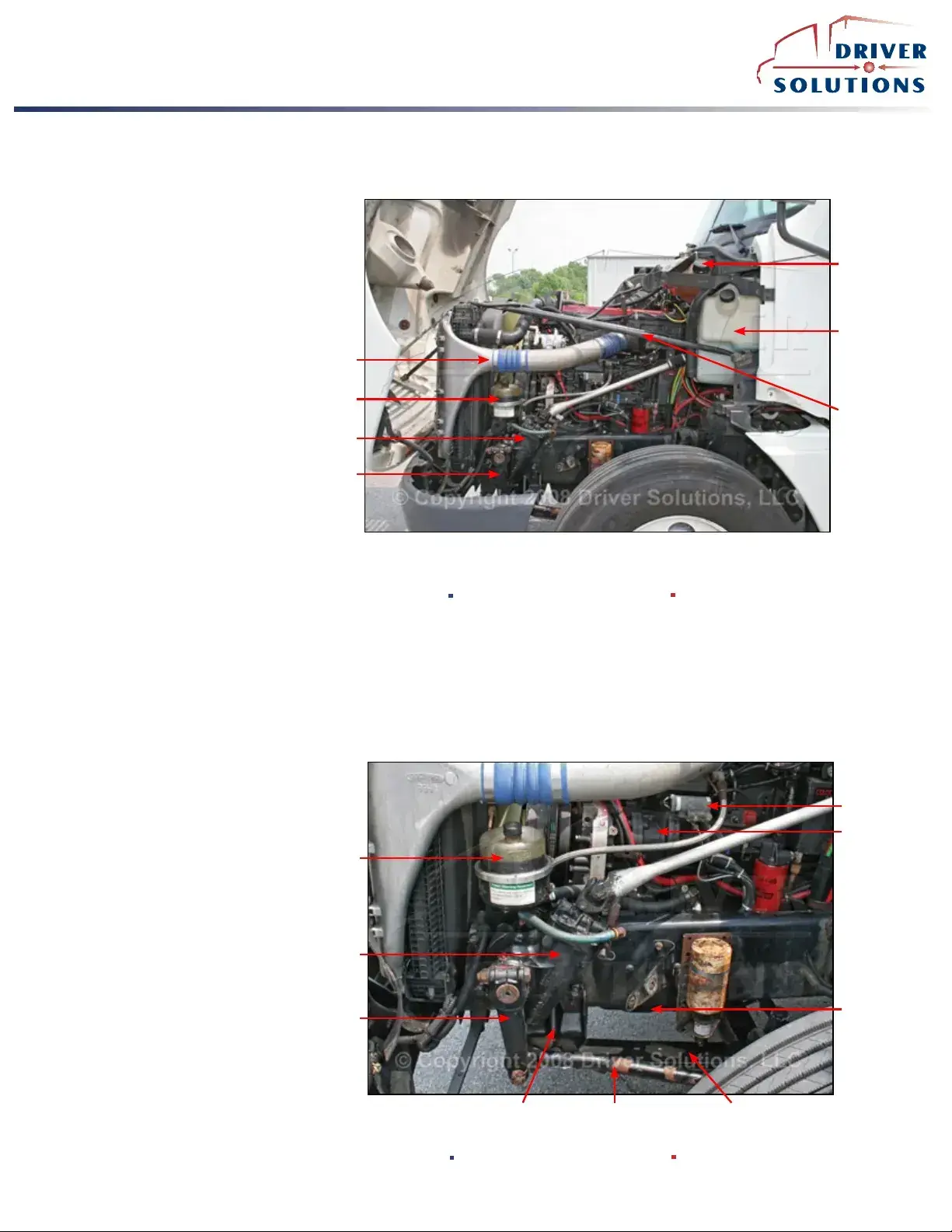
ENGINE COMPARTMENT - DRIVER SIDE
COOLANT
o Check for level and condition
o Hoses attached and not leaking
POWER STEERING RESERVOIR
o Mounted properly
o Hoses attached and not leaking
o Check for level and condition
AIR COMPRESSOR
o Mounted Securely
o No missing bolts or parts
o No air leaks at lines
o Check if gear or belt driven
o Belt no more than ¾ inch of play
o Belts not cracked or frayed
STEERING GEAR BOX
o Mounted properly
o No missing parts, nuts or bolts
o Lines and hoses not leaking or
broken
POWER STEERING RESERVOIR
o Mounted properly
o Hoses attached and not leaking
o Check for level and condition
AIR COMPRESSOR
o Mounted Securely
o No missing bolts or parts
o No air leaks at lines
o Check if gear or belt driven
o Belt no more than ¾ inch of play
o Belts not cracked or frayed
STEERING GEAR BOX
o Mounted properly
o No missing parts, nuts or bolts
o Lines and hoses not leaking or
broken
STEERING LINKAGE
o Pitman arm, Drag link, Steering
knuckle, Tie rods and tie rod ends
o Not cracked, bent or broken
o Castle nuts and cotter pins
o Not missing and in place
Engine Air Duct
Work
Power Steering
Reservoir
Steering Gear
Box
Pitman Arm
Engine Coolant
Reservoir
Windsheild
Washer Fluid
Reservoir
Radiator Brace
Pre-Trip Inspection Test Items Reference Items
ENGINE COMPARTMENT - DRIVER SIDE CON’T
Air Governor
Air Compressor
Power Steering
Reservoir
Steering Gear
Box
Engine Oil Pan
Pitman Arm
Spring Mount Drag Link Leaf Spring
Pre-Trip Inspection Test Items Reference Items
2
Class A CDL Pre-Trip Inspection
Tractor Trailer
®
AIR COMPRESSOR
o Mounted Securely
o No missing bolts or parts
o No air leaks at lines
o Check if gear or belt driven
o Belt no more than ¾ inch of play
o Belts not cracked or frayed
STEERING GEAR BOX
o Mounted properly
o No missing parts, nuts or bolts
o Lines and hoses not leaking or
broken
AIR COMPRESSOR
o Mounted Securely
o No missing bolts or parts
o No air leaks at lines
o Check if gear or belt driven
o Belt no more than ¾ inch of play
o Belts not cracked or frayed
ENGINE COMPARTMENT - DRIVER SIDE CON’T
Steering Column
Engine Air Duct
Work
Fan Belts
Gear Driven Air
Additional
Compressor
Hoses & Wiring
Steering U-Joints
Shock Absorber
Steering Gear Box Frame Rail Fuel Filter
Air Governor
Gear Driven Air
Compressor
Hoses
Pre-Trip Inspection Test Items Reference Items
ENGINE COMPARTMENT - AIR COMPRESSOR
Fuel Pump
Pre-Trip Inspection Test Items Reference Items
3
Class A CDL Pre-Trip Inspection
Tractor Trailer
®
FRONT SUSPENSION
LEAF SPRINGS
Shock Absorber
o Not shifted or out of place
o Not cracked, broken or missing
Leaf Spring
SPRING MOUNTS
o Mounted securely- front, back, and
U-blots
o Not cracked or broken
Tie Rod
SHOCK ABSORBER
o Mounted Securely
Air Hose
o Not bent or dented
o Not leaking
Air LIne
Tie Rod End
Frame Rail
LEAF SPRINGS
o Not shifted or out of place
o Not cracked, broken or missing
U-Bolt
SPRING MOUNTS
o Mounted securely- front, back, and
U-blots
o Not cracked or broken
Leaf Spring
SHOCK ABSORBER
o Mounted Securely
o Not bent or dented
o Not leaking
U-Bolts
Axle
Service Brake
Chamber
Pre-Trip Inspection Test Items Reference Items
FRONT SUSPENSION CON’T
Air Dryer location varies depending on model.
Located either behind the front bumper or behind the fuel tank.
Spring Mount
Air Dryer
Pre-Trip Inspection Test Items Reference Items
4
Class A CDL Pre-Trip Inspection
Tractor Trailer
®
HOSES AND LINES
o Mounted securely
o Not leaking
o Not cracked or frayed
CHAMBER
o Mounted securely
o Not dented or damaged
o Not leaking
SLACK ADJUSTER
o No more than 1 inch of free play at
the push rod with the brakes released.
o Not bent, broken, loose, or missing
parts
DRUMS
o Not cracked, broken or dented
o No oil leaking from inner oil seal,
free of debris
LININGS
o No cracked, broken or missing parts
o Not less than ¼ inch in thickness
HOSES AND LINES
o Mounted securely
o Not leaking
o Not cracked or frayed
CHAMBER
o Mounted securely
o Not dented or damaged
o Not leaking
SLACK ADJUSTER
o No more than 1 inch of free play at
the push rod with the brakes released.
o Not bent, broken, loose, or missing
parts
DRUMS
o Not cracked, broken or dented
o No oil leaking from inner oil seal,
free of debris
LININGS
o No cracked, broken or missing parts
o Not less than ¼ inch in thickness
FRONT BRAKES
Service Brake
Chamber
Push Rod
Castle Nut
Cotter Pin
Steering
Knuckle
Snap Ring
Pre-Trip Inspection Test Items Reference Items
FRONT BRAKES CON’T
Service Brake
Chamber
Push Rod
Clevis Pin &
Cotter Pin
Slack Adjuster
Tire
Wheel
Slack Adjuster
Adjustment Nut
Brake Drum
Brake Lining
Air Line
Air Hose
Shock Absorber
U-Bolt
Spring
Pre-Trip Inspection Test Items Reference Items
5
Class A CDL Pre-Trip Inspection
Tractor Trailer
®
FRONT WHEEL
TIRES
o Proper ination – company or
manufacturer specication
o No bulges, cuts, or retreads
o Minimum tread depth of 4/32”
RIMS
o Not bent, cracked, No welding repairs.
LUG NUTS
o None are missing
o Tight – no shinny threads, or rust trails
OUTER HUB OIL SEALS
o Not leaking, no missing bolts
o Proper oil level
DRIVER’S DOOR
o Door opens and closes properly
o Seal is in good condition
DRIVER’S MIRRORS
o Clean and free of obstruction
o Not cracked, broken, or damaged
o Mounted securely
FUEL TANK
o Mounted securely
o Not leaking
o Seal in cap OK
Wheel
Tire
Hub Oil
Lug Nut
Reservior
Outer Hub
Valve Cap
Oil Seal
Pre-Trip Inspection Test Items Reference Items
DRIVER FUEL AREA
Mirror
Storage
Compartment
Door
Cap & Seal
Battery Box &
Cover
Saddle Mounts Leaks
Pre-Trip Inspection Test Items Reference Items
6
Class A CDL Pre-Trip Inspection
Tractor Trailer
®
AIR LINES & ELECTRIC LINE
o Not cracked, frayed, cut, or kinked
o Mounted securely at the glad hands
o Not leaking
BATTERY BOX & BATTERIES
o Box is mounted properly
Lights &
o Batteries are secure in the box
Reectors
o Lid secure
o Connections not corroded
CATWALK
Electrical Line
o Mounted properly
o Not, missing, or damaged
o Free of obstructions
Glad Hand
DRIVE SHAFT
o Not bent, or damaged
o Coupling, U-joints appear secure
Service &
Emergency
Airlines
EXHAUST SYSTEM
o Securely mounted
Battery Box &
o Not dented or damaged
Batteries
o Not leaking
FRAME
o Not cracked, or damaged
o No missing bolts
o No illegal welds
LIGHTS & REFLECTORS
o Clean and working
Lights
HEADER BOARD
o No holes or missing rivets
Header Board
LIGHTS & REFLECTORS
o None broken, cracked, or missing
o Working and proper color of amber
BEHIND THE CAB
Frame Catwalk
Exhaust
Drive Shaft
Pre-Trip Inspection Test Items Reference Items
FRONT OF TRAILER
Height Sticker
Electric Hookup
Air Line
Pre-Trip Inspection Test Items Reference Items
7
Class A CDL Pre-Trip Inspection
Tractor Trailer
®
CONTROL ARM MOUNT
o Mounted securely
o Not bent, broken or damaged
CONTROL ARM
o Mounted securely – front, back, and
U-bolts
o Not cracked, or broken
SHOCK ABSORBER
o Mounted Securely
o Not bent, dented or leaking
TORSION BAR
o Mounted Securely
o Not bent, broken or damaged
AIR BAGS
o Mounted Securely
o Not leaking
CONTROL ARM MOUNT
o Mounted securely
o Not bent, broken or damaged
CONTROL ARM
o Mounted securely – front, back, and
U-bolts
o Not cracked, or broken
SHOCK ABSORBER
o Mounted Securely
o Not bent, dented or leaking
TORSION BAR
o Mounted Securely
o Not bent, broken or damaged
AIR BAGS
o Mounted Securely
o Not leaking
DRIVE AXLE SUSPENSION
Torsion Bar
Spring Brake
Chamber
Control Arm
Spring Brake
Chamber
Air Bag
Control Arm
Mount
Control Arm
Pre-Trip Inspection Test Items Reference Items
DRIVE AXLE SUSPENSION CON’T & FIFTH WHEEL
Skid Plate
Shock Absorber
Mounting
Bolts
Spring
Locking
Pins
Air Bag
Control Arm
Mount
Tire
Control Arm
Space
Pre-Trip Inspection Test Items Reference Items
8
Class A CDL Pre-Trip Inspection
Tractor Trailer
®
HOSES AND LINES
o Mounted securely
o Not leaking
o Not cracked or frayed
CHAMBER
o Mounted securely
o Not dented or damaged
o Not leaking
SLACK ADJUSTER
o No more than 1 inch of free play at
the push rod with the brakes released.
o No bent, broken, loose, or missing
parts
DRUMS
o Not cracked, broken or dented
o No oil leaking from inner oil seal,
free of debris
LININGS
o No cracked, broken or missing parts
o Not less than ¼ inch in thickness
TIRES
o Proper ination - company or
manufacturer specication.
o No bulges or cuts, can have retreads
o Minimum tread depth of 2/32”
RIMS
o Not bent or cracked
o No welding repairs
LUG NUTS
o None missing
o Tight – no shinny threads, or rust
trails
OUTER AXLE SEAL
o Not leaking, no missing bolts
SPACE OR SPACER
o Check for objects between wheels
o Check for proper spacing
DRIVE BRAKES & DRIVE SHAFT
Air Line
Drive Shaft
Service Brake
Chamber
Universal Joint
Frame
Brake Chamber
Mount
Differential
Slack Adjuster
Pre-Trip Inspection Test Items Reference Items
DRIVE WHEELS
Dayton Rim Spacer
Pre-Trip Inspection Test Items Reference Items
Tire
Lug Nuts
Bud Rim
Outer Axle Seal
9
Class A CDL Pre-Trip Inspection
Tractor Trailer
®
LIGHTS & REFLECTORS
o Not cracked, or broken
o Working and proper color
SPLASH GUARDS
o Not missing or torn and
properly mounted
MOUNTING BOLTS
o None missing or broken
RELEASE ARM
o Not bent, broken, or damaged
o Engaged in the lock position
LOCKING PINS
o No missing or broken parts
o Engaged and locked
PLATFORM
o Securely holds skid plate
o Not cracked, or broken
SKID PLATE
o Mounted properly on the platform
o Properly greased
o Tilting freely
KING PIN
o Not broken, bent, or damaged
APRON
o No bends or damage to visible portions
GAP
o Check that the trailer apron is lying at
on the fth wheel skid plate
JAWS
o Check that the locking jaws are fully
REAR OF TRACTOR
Locking Jaws
Reectors
Lights
Splash Guard
Air Bags
Pre-Trip Inspection Test Items Reference Items
COUPLING SYSTEM
Skid Plate
Mounting Bolts
Pivot Pin
Release Arm
Slide Stops
(all 4 corners)
Platform
Welds
Pre-Trip Inspection Test Items Reference Items
Slide Locking PinFrame
Spring Mount
closed around the shank of the king pin
10

Document Specifics

Fact Name Description
Purpose The Pre Trip Inspection Checklist is designed to ensure vehicle safety and compliance before operation.
Components The checklist typically includes items such as brakes, lights, tires, and fluid levels.
Frequency Drivers must complete the checklist before each trip to ensure vehicle readiness.
Documentation Completed checklists should be retained for a specified period as proof of compliance.
State Regulations Different states may have specific requirements governing the use of the checklist.
Federal Law The Federal Motor Carrier Safety Administration (FMCSA) mandates pre-trip inspections under 49 CFR Part 396.
Consequences of Non-Compliance Failure to complete the checklist can result in penalties and increased liability in case of accidents.
Training Drivers should receive training on how to properly complete the checklist and understand its importance.

Pre Trip Inspection Checklist: Usage Instruction

Before starting your trip, it is essential to ensure that your vehicle is in good working condition. Completing the Pre Trip Inspection Checklist form helps identify any potential issues that may need attention. Follow these steps to accurately fill out the form.

  1. Begin by writing the date at the top of the form. This helps keep a record of when the inspection was conducted.
  2. Enter your name and contact information. This identifies who completed the inspection.
  3. Provide the vehicle identification number (VIN) or license plate number. This ensures the inspection is linked to the correct vehicle.
  4. Check each item listed on the form. This may include items like brakes, lights, tires, and fluid levels.
  5. For each item, mark whether it is in good condition or if repairs are needed. Use checkboxes or a designated space to indicate your findings.
  6. If repairs are necessary, note the specific issues in the comments section. This provides clarity on what needs to be addressed.
  7. Once all sections are completed, review the form to ensure accuracy. Double-check that all items have been addressed.
  8. Sign and date the form at the bottom. This signifies that the inspection has been completed and verified.

Learn More on Pre Trip Inspection Checklist

What is a Pre Trip Inspection Checklist?

A Pre Trip Inspection Checklist is a detailed form used by drivers to assess the condition of their vehicle before starting a trip. This checklist helps ensure that the vehicle is safe and roadworthy, reducing the risk of accidents and mechanical failures.

Why is a Pre Trip Inspection Checklist important?

This checklist is crucial for several reasons:

  • It enhances safety by identifying potential issues before they become serious problems.
  • It helps maintain compliance with federal and state regulations regarding vehicle safety.
  • It can reduce repair costs by catching minor issues early.
  • It provides documentation of vehicle condition, which can be useful in case of accidents or inspections.

What items are typically included in the checklist?

The checklist usually covers various components of the vehicle, including:

  1. Brakes
  2. Lights and reflectors
  3. Tires and wheels
  4. Fluid levels (oil, coolant, etc.)
  5. Windshield wipers
  6. Emergency equipment
  7. Steering and suspension
  8. Battery condition

Who is responsible for completing the Pre Trip Inspection Checklist?

The driver is primarily responsible for completing the Pre Trip Inspection Checklist. However, fleet managers and maintenance personnel may also be involved in ensuring that the checklist is used correctly and that any issues are addressed promptly.

How often should the checklist be completed?

The checklist should be completed before every trip. This ensures that the vehicle is in good condition for each journey, regardless of how short or long the trip may be.

What happens if issues are found during the inspection?

If issues are identified during the inspection, the driver should not operate the vehicle until those problems are resolved. The driver should report the issues to the appropriate personnel, such as a fleet manager or mechanic, for further evaluation and repair.

Can a Pre Trip Inspection Checklist be customized?

Yes, organizations can customize the checklist to meet their specific needs. Factors such as the type of vehicle, the nature of the trips, and regulatory requirements may influence the items included in the checklist.

Is there a standard format for the checklist?

While there is no single standard format, many organizations follow guidelines set by the Federal Motor Carrier Safety Administration (FMCSA). It's important to ensure that the checklist is comprehensive and easy to use.

How can drivers ensure they are completing the checklist correctly?

Drivers can ensure proper completion by following these steps:

  • Familiarize themselves with the checklist items.
  • Take their time during the inspection to avoid missing any details.
  • Ask for training or guidance if unsure about any inspection points.
  • Keep a copy of the completed checklist for their records.

What should be done with the completed checklist?

The completed checklist should be submitted to the appropriate authority within the organization, such as a fleet manager or safety officer. Keeping a record of these checklists can be beneficial for compliance and safety audits.

Common mistakes

Completing the Pre Trip Inspection Checklist is a critical step for ensuring vehicle safety and compliance. However, many individuals make common mistakes that can lead to serious consequences. Understanding these pitfalls can help drivers and operators perform thorough inspections.

One frequent mistake is overlooking important components. Some individuals may rush through the checklist, skipping sections or not paying enough attention to specific areas. For example, failing to check tire pressure or brake functionality can result in dangerous situations on the road. Each component listed on the checklist plays a vital role in vehicle safety.

Another common error is incomplete documentation. When filling out the checklist, it’s essential to provide accurate and detailed information. Leaving out critical details, such as the date, vehicle identification number, or inspector’s name, can create confusion later. Incomplete forms may lead to misunderstandings about the vehicle’s condition.

People often forget to note any defects they observe during the inspection. If a driver notices a problem, such as a fluid leak or worn-out wipers, it should be documented clearly on the checklist. Ignoring these issues can result in further damage or safety hazards, ultimately putting lives at risk.

Additionally, some individuals neglect to sign the checklist after completing the inspection. A signature serves as confirmation that the inspection has been conducted and that the information provided is accurate. Without a signature, the checklist may be considered incomplete, which can lead to complications during audits or inspections.

Another mistake involves using outdated checklists. Regulations and safety standards can change, so it’s crucial to use the most current version of the Pre Trip Inspection Checklist. Relying on an old form may result in missing new requirements or safety checks that are now mandatory.

Finally, not reviewing the checklist after completion is a common oversight. Once the form is filled out, it’s important to double-check for any errors or omissions. A quick review can catch mistakes that could otherwise lead to significant issues down the line.

By being aware of these mistakes, individuals can improve their inspection processes and contribute to safer roadways. Taking the time to complete the Pre Trip Inspection Checklist thoroughly and accurately is not just a formality; it’s a commitment to safety.

Documents used along the form

When preparing for a trip, especially in a commercial vehicle, several forms and documents complement the Pre Trip Inspection Checklist. These documents help ensure safety, compliance, and efficiency. Below is a list of commonly used forms that you should consider.

  • Driver's Daily Log: This form records a driver's hours of service, ensuring compliance with regulations regarding driving time and rest periods.
  • Vehicle Maintenance Record: This document tracks all maintenance performed on the vehicle, helping to identify any recurring issues and ensuring the vehicle is in good working order.
  • Accident Report Form: In the event of an accident, this form captures details about the incident, including involved parties, damages, and witnesses, which is crucial for insurance claims.
  • Fuel Purchase Receipts: Keeping records of fuel purchases helps monitor fuel efficiency and manage expenses, important for budgeting and cost control.
  • Trip Manifest: This document outlines the details of the trip, including destinations, cargo, and delivery schedules, ensuring all parties are informed and prepared.
  • Emergency Contact List: This list contains important contacts in case of emergencies, including company contacts, roadside assistance, and medical services.
  • Load Securement Checklist: This form verifies that all cargo is properly secured, reducing the risk of accidents caused by shifting loads during transport.
  • Inspection Report: Often required by regulatory agencies, this report documents the results of any inspections performed on the vehicle, ensuring compliance with safety standards.

Utilizing these documents alongside the Pre Trip Inspection Checklist will enhance safety and compliance. Staying organized and thorough in your preparations can prevent potential issues on the road.

Similar forms

The Vehicle Inspection Report is similar to the Pre Trip Inspection Checklist in that both documents serve to ensure vehicle safety and compliance before operation. The Vehicle Inspection Report typically provides a detailed account of a vehicle's condition, noting any defects or maintenance needs. This report is often used by fleet managers to track the overall health of vehicles and to ensure that any issues are addressed promptly, thereby reducing the risk of accidents caused by mechanical failures.

The Daily Vehicle Inspection form shares similarities with the Pre Trip Inspection Checklist as it is used to assess a vehicle's readiness for daily operations. This form usually requires drivers to check essential systems and components, such as brakes, lights, and tires, before beginning their shift. Both documents emphasize the importance of routine checks to enhance safety and operational efficiency, ensuring that vehicles are safe for use on the road.

The Maintenance Log is another document that aligns with the Pre Trip Inspection Checklist. While the checklist focuses on pre-trip conditions, the Maintenance Log records all repairs and services performed on a vehicle over time. This ongoing documentation helps identify patterns of wear and tear, allowing for proactive maintenance that can prevent issues before they arise. Together, these documents create a comprehensive view of a vehicle's operational history and current state.

The Incident Report Form complements the Pre Trip Inspection Checklist by documenting any accidents or incidents involving a vehicle. While the checklist aims to prevent incidents through thorough inspections, the Incident Report captures the details of what happened when safety measures failed. Both documents are crucial for understanding the factors that contribute to vehicle safety and for developing strategies to mitigate risks in the future.

The Driver Vehicle Inspection Report (DVIR) is closely related to the Pre Trip Inspection Checklist. The DVIR is specifically designed for commercial drivers to document their inspection findings and report any defects. Like the Pre Trip Inspection Checklist, it emphasizes the need for thorough inspections and is often required by law for commercial vehicle operators. Both documents serve to promote accountability and safety within the transportation industry.

The Equipment Condition Report also bears similarities to the Pre Trip Inspection Checklist. This document is used to assess the condition of various types of equipment, not just vehicles. It provides a systematic approach to evaluating whether equipment is safe and functional. While the checklist focuses on vehicles, both documents aim to ensure that all operational equipment meets safety standards and is ready for use.

The Safety Audit Checklist is another relevant document that complements the Pre Trip Inspection Checklist. This checklist is typically used to evaluate the overall safety practices within an organization, including vehicle inspections. While the Pre Trip Inspection Checklist focuses on individual vehicles, the Safety Audit Checklist takes a broader view, assessing compliance with safety regulations and best practices. Both tools are essential for fostering a culture of safety in transportation operations.

Finally, the Compliance Review Checklist is similar in purpose to the Pre Trip Inspection Checklist. This document is used to ensure that all operational practices comply with relevant laws and regulations. It includes various aspects of vehicle operation, from inspections to maintenance schedules. Both checklists are critical for maintaining compliance and ensuring that safety protocols are followed, thereby protecting drivers and the public alike.

Dos and Don'ts

When filling out the Pre Trip Inspection Checklist form, it's essential to follow certain guidelines to ensure accuracy and compliance. Here’s a list of what to do and what to avoid:

  • Do read the entire checklist carefully before starting.
  • Do use clear and legible handwriting.
  • Do check each item thoroughly to ensure safety.
  • Do report any issues immediately to your supervisor.
  • Don't rush through the inspection process.
  • Don't skip any items, even if they seem minor.
  • Don't use abbreviations that may confuse others.
  • Don't forget to sign and date the form after completion.

Misconceptions

Understanding the Pre Trip Inspection Checklist form is essential for ensuring safety and compliance in vehicle operation. However, several misconceptions can lead to confusion. Here are five common misconceptions:

  • It is optional for drivers. Many believe that completing the checklist is not mandatory. In reality, it is a legal requirement for commercial drivers to perform and document a pre-trip inspection.
  • Only mechanical issues are important. Some think the checklist focuses solely on mechanical components. However, it also includes safety features like lights, brakes, and mirrors, which are crucial for safe operation.
  • It can be completed quickly without thoroughness. A common belief is that the checklist can be rushed. In truth, a thorough inspection is vital to identify potential issues that could lead to accidents or breakdowns.
  • It is the same for all vehicles. Some assume that one checklist fits all types of vehicles. Each vehicle type may have specific requirements that must be addressed in the checklist.
  • It only needs to be done before long trips. Many drivers think the checklist is only necessary for long hauls. In fact, it should be completed before every trip, regardless of distance, to ensure ongoing safety.

Key takeaways

Completing a Pre Trip Inspection Checklist is essential for ensuring safety and compliance before operating a vehicle. Here are six key takeaways to keep in mind:

  • Thoroughness is crucial. Every section of the checklist should be completed to ensure no critical component is overlooked.
  • Documentation matters. Keep a copy of the completed checklist for your records. This can be helpful in case of an inspection or incident.
  • Regular training is important. Drivers should be trained on how to properly fill out the checklist and understand what to look for during inspections.
  • Address issues immediately. If any problems are identified during the inspection, they should be resolved before the vehicle is used.
  • Consistency is key. Conducting inspections regularly, regardless of the vehicle's condition, helps maintain safety standards.
  • Use it as a teaching tool. The checklist can serve as a guide for new drivers to learn about vehicle maintenance and safety.

By following these takeaways, drivers can enhance their safety practices and ensure their vehicles are in optimal condition for the road.